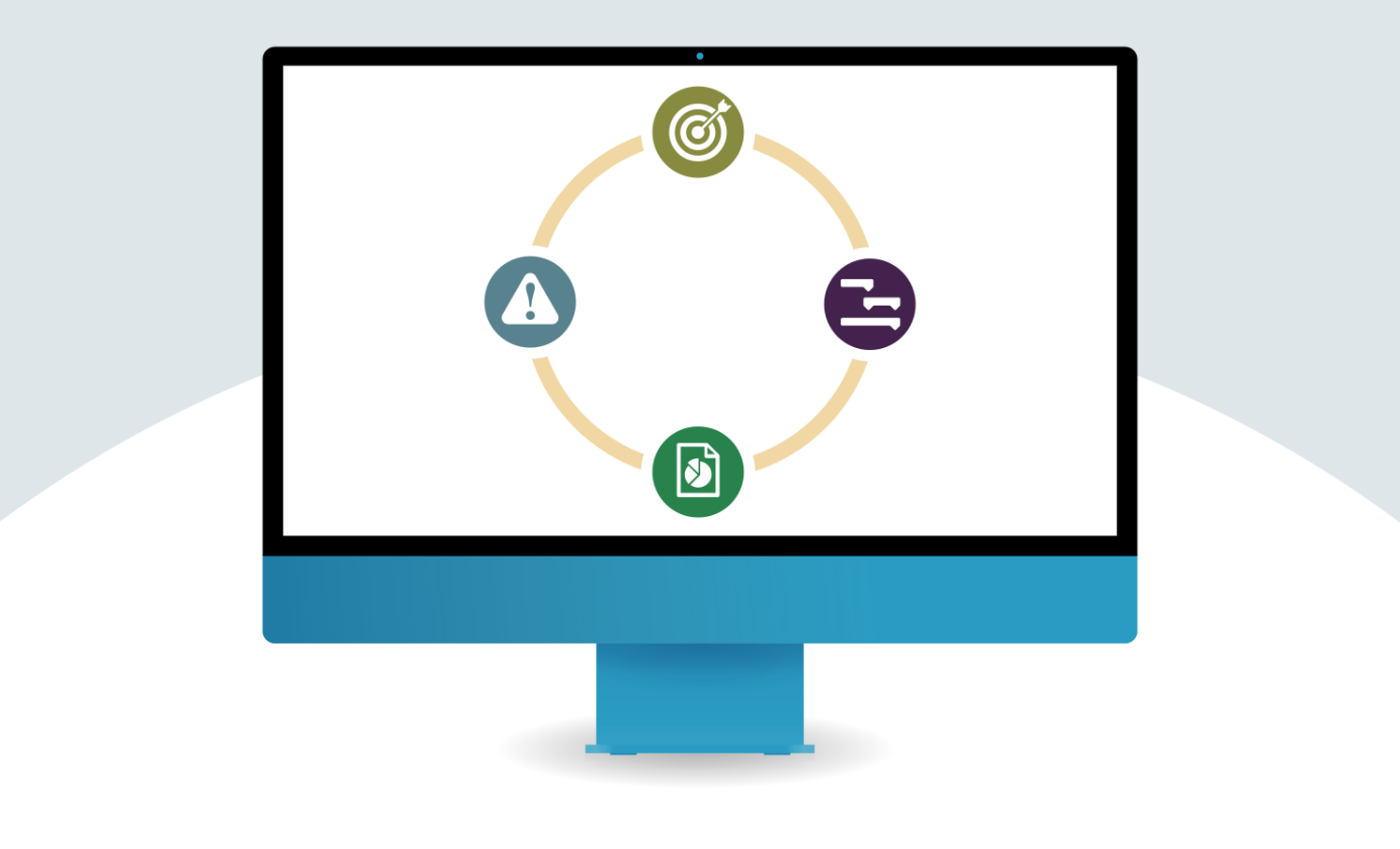
Most large organisations already understand the importance of the major business disciplines:
- Risk management: robust controls, audits and policies to avoid compliance breaches and reputational damage.
- Strategy: Clear strategy with defined objectives and KPIs to drive business outcomes.
- Change and investment portfolios: Initiatives aligned to strategy , delivering real value rather than just activity.
Yet despite these investments, something crucial is missing: alignment. Too often, these disciplines operate in isolation.
- Strategy is agreed in workshops, then captured in static slide decks.
- Risk registers live in spreadsheets, passed from team to team.
- Projects and portfolios are tracked in a patchwork of departmental tools with little connection to overarching goals
- Audits and policy reviews are managed in entirely separate systems.
Each function is doing its job, but none are doing it together. The result is fragmentation. And fragmentation costs more than you think.
The Real Cost of Silos
Disconnected strategy, risk, and execution creates four critical problems:
1. No strategic traceability
Without linking initiatives back to objectives, leaders lose sight of which investments are driving real outcomes. Decisions become reactive, accountability erodes, and opportunities slip through the cracks.
2. Benefits realisation failure
Projects close, sponsors move on, and benefits go unmeasured. The truth is often buried in KPIs across different functions, but no one is accountable for keeping them updated.
3. Strategy can introduce new risks
Change portfolios may unintentionally create vulnerabilities. For instance, launching a new AI tool might accelerate innovation but weaken cyber controls, expose sensitive data, or conflict with regulatory requirements.
4. Governance gaps
When strategy, investment and risk are managed in separate systems, leadership is forced to stitch together governance manually. This slows decisions, obscures root causes, and reduces confidence. You cannot escalate what you cannot see.
AI Makes Alignment Even More Critical
The rapid adoption of artificial intelligence makes this challenge even more urgent.
AI enables faster innovation, but often outpaces governance frameworks and your policies. It introduces new categories of risk — bias, ethics, privacy, reputational exposure — and magnifies the impact of poor data quality.
Without a connected view of objectives, initiatives and risks, organisations cannot govern AI responsibly or confidently.
A Better Way Forward
The organisations that thrive are those that align strategy, change and risk. That means:
1. A unified governance framework
Bring strategy, investment and risk stakeholders together in cycles focused on value and risk, rather than just cost and delivery reviews.
2. Strategy-to-delivery ownership
Assign a clear owner to each strategic pillar. Tie project investments directly to these pillars and their KPIs, ensuring accountability across the organisation.
3. Align KPIs to Benefits
Connect agreed KPIs to business case benefits. Use them to measure success and ensure real value is realised, not just promised.
4. Risk-adjusted strategy mapping
For every strategic pillar, linking:
- The risks it may introduce (including emerging ones such as AI ethics and data privacy)
- The controls that must be monitored
- The policies & regulations it affects
5. Integrated reporting
Dashboards that connect projects to outcomes, outcomes to risks, and risks to controls. Even partial integration uncovers blind spots and drives better decisions.
Why This Matters
For
Heads of Change: clear traceability from strategy through to delivery.
For
Risk Leaders: visibility of risks introduced by change portfolios.
For
Heads of Strategy and Transformation: confidence that execution strengthens, not undermines, corporate goals.
For
CIOs: a single source of truth, not fragmented systems.
For
CFOs: accountability for benefits, not assumptions.
Our Point of View
This isn’t about bolting systems together. Integrations can still create silos. The solution is a single platform where strategy, change, and risk are inherently connected.
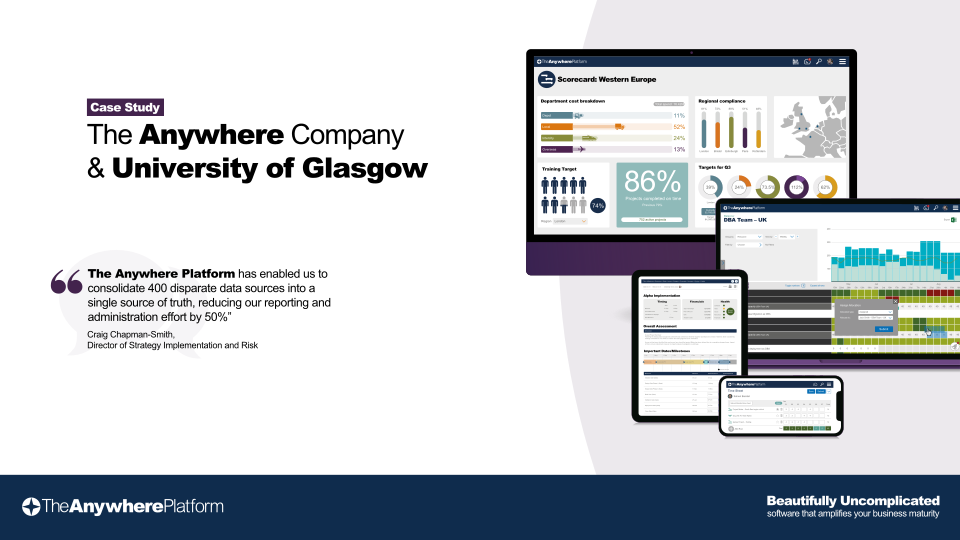
That is why we built The Anywhere Platform: to give senior leadership one connected view of value, risk and performance , enabling faster decisions, confident governance, and reduced uncertainty.