When we engage with executives and senior leaders, one of the first questions they often ask is, "Is our PMO too expensive?"
You might expect the answer to be an automatic yes. But it isn't.
Why Cost Isn't the Real Question
For years, organisations have treated the PMO as a business-as-usual (BAU) expense - simply part of the cost of delivering change.
This often leads to senior leaders asking the question, "Am I spending too much on this function?"
This concern is particularly strong in people-heavy PMOs, where headcount makes up most of the budget. But the better question isn't about how much you spend, it's about the value you receive.
Most PMOs Can't Articulate Their Value
Most PMOs can describe what they do - the reports they produce, the governance they enforce, the consistency they bring. But few can clearly articulate what that translates to in business value.
They describe their contribution to the organisation, but struggle to answer:
- What's the ROI of our oversight?
- How does our governance reduce financial exposure?
- What risks do we prevent by maintaining project transparency and consistency?
Without a tangible sense of return, the PMO is easily seen as a cost centre rather than a value generator. And when budgets tighten, cost centres are always under scrutiny.
PMO as a Function of Risk
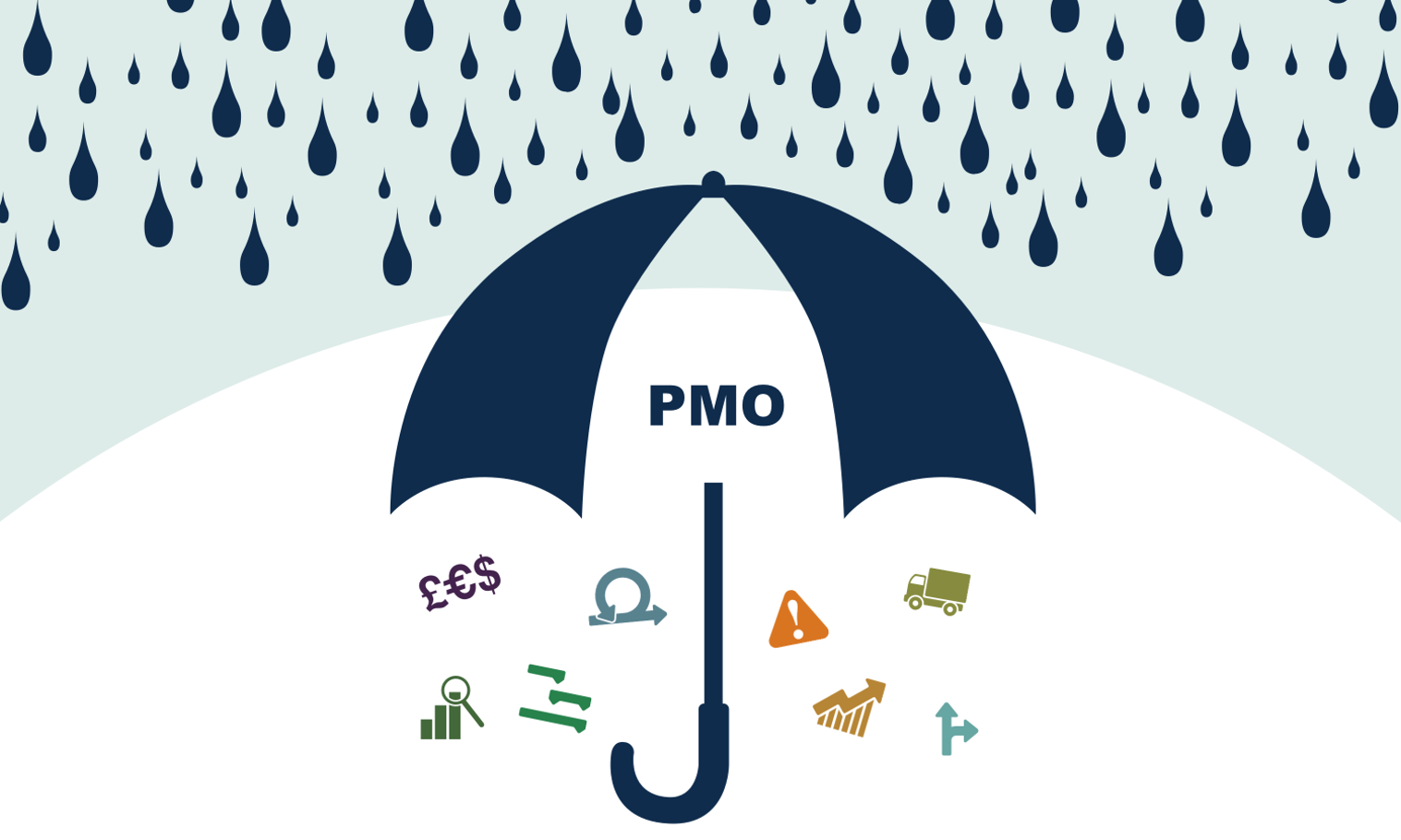
A PMO isn't just about reporting, governance or standards, it's fundamentally about risk management.
Without the transparency, discipline and insight provided by a PMO, an organisation's overall portfolio will almost certainly deliver a lower return on investment. Missed dependencies, duplicated effort, delayed benefits and poor prioritisation all carry real financial consequences.
When viewed through a risk professional's lens, the PMO's value becomes much clearer. Every programme of work carries risk exposure, and that exposure has a price. By improving visibility, control and decision-making, your PMO actively reduces that exposure. Risk avoidance has measurable value.
Better Questions to Ask
Instead of asking whether the PMO is too expensive, senior leaders should ask:
- Is the value our PMO provides in line with the risk it mitigates?
- Are we achieving optimal risk reduction for our PMO investment?
- If we are serious about achieving our strategic objectives, are we investing in risk mitigation at the right level?
If you can't answer those questions confidently, someone else eventually will - and they may decide your PMO is too expensive.
The Takeaway
If you can't clearly articulate how your PMO creates value, particularly in terms of financial risk and return, you'll always be vulnerable to the perception that it's too expensive.
Executives don't mind paying for value. They mind paying for ambiguity.
So before someone else decides your PMO costs too much, make sure you can prove it's worth every dollar.