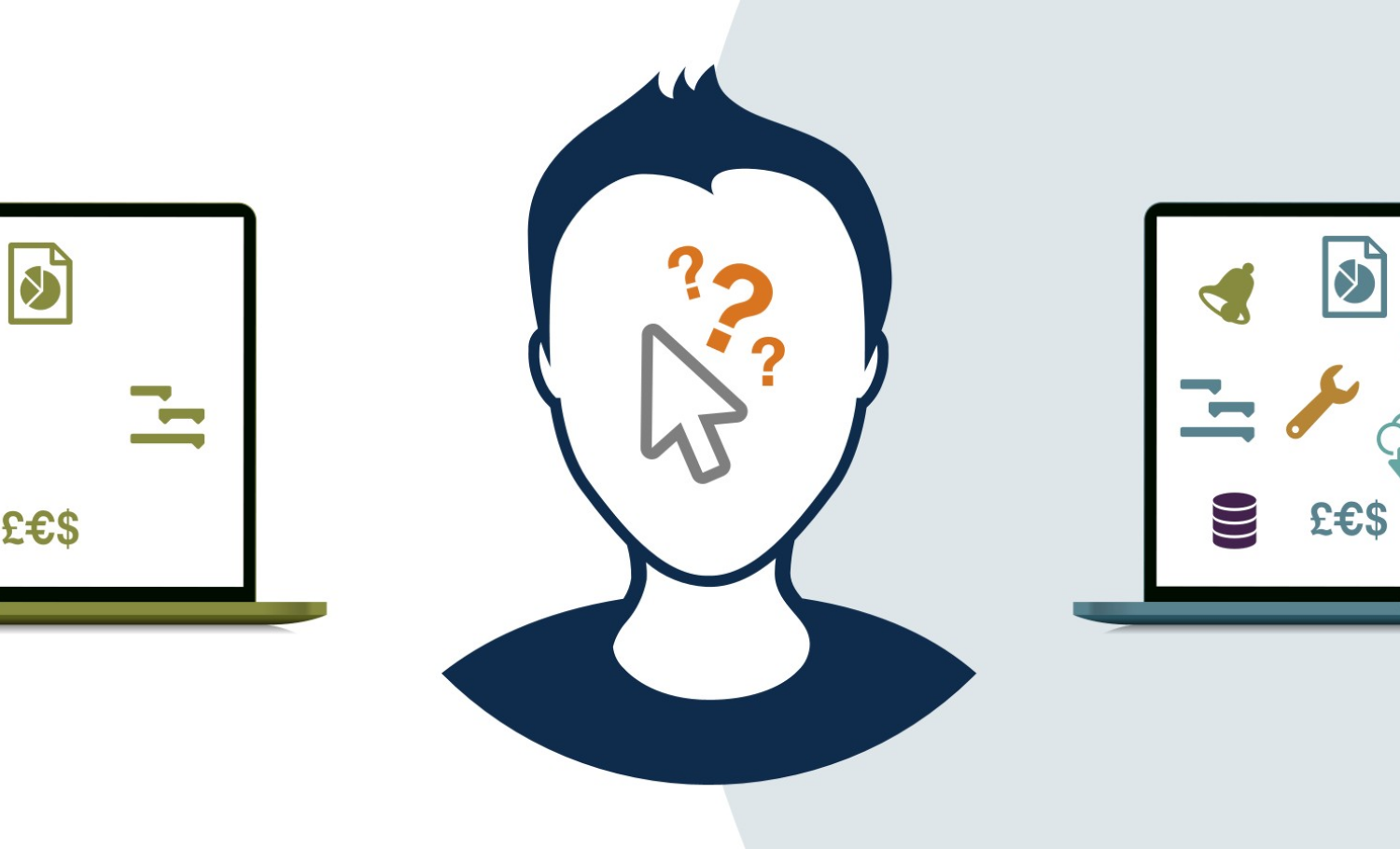
You're six months into the software selection process. Vendors have presented, demos have been delivered, and your team has finally narrowed it down to two options. But as you stare at the comparison matrix, you realise you're facing an impossible choice.
This is the procurement dilemma that haunts every major software decision and it's setting your organisation up for failure before you even sign the contract.
Option 1: Choose Something Simple That Works Today
One of the modern, pure-play SaaS platforms catching attention on LinkedIn. The demo was impressive, clean interface, intuitive workflows, low learning curve. Your end users might actually embrace it without extensive change management. The vendor promises rapid implementation: "Live in 30 days!" The pricing seems reasonable. The reference customers rave about user adoption rates.
But then the questions start creeping in:
- What happens when we outgrow this platform in two years?
- Will it integrate with our enterprise systems?
- Can it handle our volume when we scale?
- Does it support the advanced workflows we'll need eventually?
The trap: You'll get initial wins, but you're essentially buying a solution with a built-in expiration date. When your business grows beyond the platform's capabilities, you'll be back in procurement mode, facing another expensive migration.
Option 2: Invest in a Complex Solution for Tomorrow's Promise
One of the established enterprise platforms with feature-rich capabilities. It can handle everything you do today and everything you might need in the future. The vendor's roadmap is impressive, the integration capabilities are robust, and the scalability is proven.
But the concerns are equally significant:
- Will users find it too complex and resist adoption?
- How much will we actually use of what we're paying for?
- Can our team handle the change management challenge?
- What if we've overestimated our future needs?
The trap: You're paying enterprise prices for capabilities you may never use, while risking user rejection due to complexity. Even if implementation succeeds, you might end up with expensive software that delivers only a fraction of its potential value
The Lose-Lose Reality
Either choice leads to the same outcome: misalignment between your business needs and your software capabilities.
Choose simple: You'll outgrow it and need to replace it. Choose complex: You'll underutilise it and overpay for unused features.
Both paths result in:
- Failed ROI targets from your business case
- Additional investments in change management or new platforms
- User frustration and adoption challenges
- Transformation fatigue across the organisation
What if there was an Option 3?
What if you didn't have to choose between simple-but-limiting and complex-but-risky? What if you could start with a solution aligned to your current capabilities that automatically grows more sophisticated as your organisation matures?
This approach would eliminate the procurement dilemma entirely:
- No risk of outgrowing a simple platform
- No waste from underutilising a complex system
- No need to predict future needs with impossible accuracy
- No forced migration when your business evolves
The technology exists to make this possible.
In our next post, we'll explore how leadership turnover compounds the software alignment problem, and why traditional implementations can't keep pace with modern organisational change.